
No-account casinos in the UK: what to check
 Available in GB
A different signup journey does not change licensing, and bonus terms, payment routes and withdrawals still need checking.

Table of Contents
- The licence still matters when there’s no account
- What “no account” actually means in practice
- Looking for an online casino without the usual signup—what to check
- Bonus wording is where the small print bites
- A no-account casino review should look past the first deposit
- Mobile play and real-money payments are not the same thing
- Checking a newly launched casino before you trust the label
- Free spins and no-deposit offers: read the terms, not the headline
- Trustly and “no account”: check where the money can go
- Paysafecard deposits don’t settle the withdrawal question
The licence still matters when there’s no account
“No account” sounds like a change to the rules. It isn’t. It describes a way a casino may present its service; it does not remove the legal framework that applies to the operator. If a remote casino offers gambling to people in Great Britain, the question of who regulates that business still matters, whether the first screen asks you to create a profile or invites you to play another way.
The UK Gambling Commission regulates gambling activity in the United Kingdom, including online casinos. For remote gambling offered to consumers in Great Britain, its reach does not depend on where the operator’s equipment is located. A company cannot make the relevant oversight disappear simply by running its systems somewhere else. The service is being offered to people here, so the operator’s position under the rules for this market remains important.
That distinction is easy to lose in the sales language. “No account” can sound as if the casino exists outside the ordinary setup, almost like a game that sits apart from the regulated market. But a different customer journey does not create a different regulator. I’ve been tempted by the promise of fewer hoops myself; the label can feel like the whole story when it is only one part of how a site describes access.
If you’re looking at no-account casino options in the UK for 2026, payout timing is one practical detail to check. Use the stated withdrawal estimate for each operator as a reference point.
Payout speed: 1-3 business days NightLuck lists a payout speed of 1–3 business days.
Payout speed: 1-3 business days WinBeast lists a payout speed of 1–3 business days.
Payout speed: 1-3 business days NightWin lists a payout speed of 1–3 business days.
Payout speed: 1-3 business days BeOnBet lists a payout speed of 1–3 business days.
Payout speed: 1-3 business days Revery Play lists a payout speed of 1–3 business days.
Payout speed: 1-3 business days Britsino lists a payout speed of 1–3 business days.
Payout speed: 1-3 business days EvoSpin lists a payout speed of 1–3 business days.
Payout speed: 1-3 business days Chanze lists a payout speed of 1–3 business days.
Payout speed: 1-3 business days Zombillion lists a payout speed of 1–3 business days.
Payout speed: 1-3 business days Jetsetspins lists a payout speed of 1–3 business days.
The Commission is the sole regulator for commercial gambling in Great Britain. It issues operating licences to businesses and personal licences to individuals working in relevant roles. Those are different kinds of permission: the business licence concerns the operator’s authority to offer gambling, while a personal licence applies to individuals operating within the industry. Seeing a brand name on a screen does not by itself tell you which business is behind the service or what permissions that business holds.
So when a casino advertises a route that avoids the usual account setup, keep the basic distinction in view: the route into a game is not the same thing as the operator’s authority to provide it. The regulator’s role attaches to the gambling business and the service it offers, not to whether a registration form appears before the first game. That is the part I wish I’d kept straight earlier. Different doorway. Same rules.

This is also why “no account” should not be read as a legal category. It is a label used to describe an experience, not a special kind of licence. The underlying service is still remote gambling if it is delivered online to consumers in Great Britain. A slick interface, a payment button, or an app-like page does not alter that basic character. Nor does the operator’s location settle the question: the Commission’s remit over remote gambling for Great Britain consumers is not switched off by equipment being hosted elsewhere.
The practical point is not complicated, even if the advertising tries to make it feel novel. Think first about the business offering the casino, then about the way it lets you access play. Those are separate questions. The absence of a conventional account may be relevant to how the service works for a customer, but it cannot stand in for the operator’s regulatory status.

I’ve made the mistake of treating a confident-looking site as a shortcut to confidence in the business behind it. The page can be polished; the wording can be simple; neither fact tells you who is accountable for the gambling service. Regulation is less visible than a sign-up button, but it is more important than the button. If the operator is serving Great Britain, the relevant UK Gambling Commission framework still applies.
That is the legal context for any claim about a no-account casino in the UK: the format may be presented as unusual, but the operator does not get an exemption from the market’s regulatory system because of that format. Keep the two ideas apart. How access is arranged is one issue. Who is permitted to offer the gambling service is another. One does not answer the other.
What “no account” actually means in practice
“Casino without an account” sounds like you can arrive, pay and play without the usual registration screens. In practice, the label is about how the operator handles the start of the visit, not a promise that it will never need to know who you are.
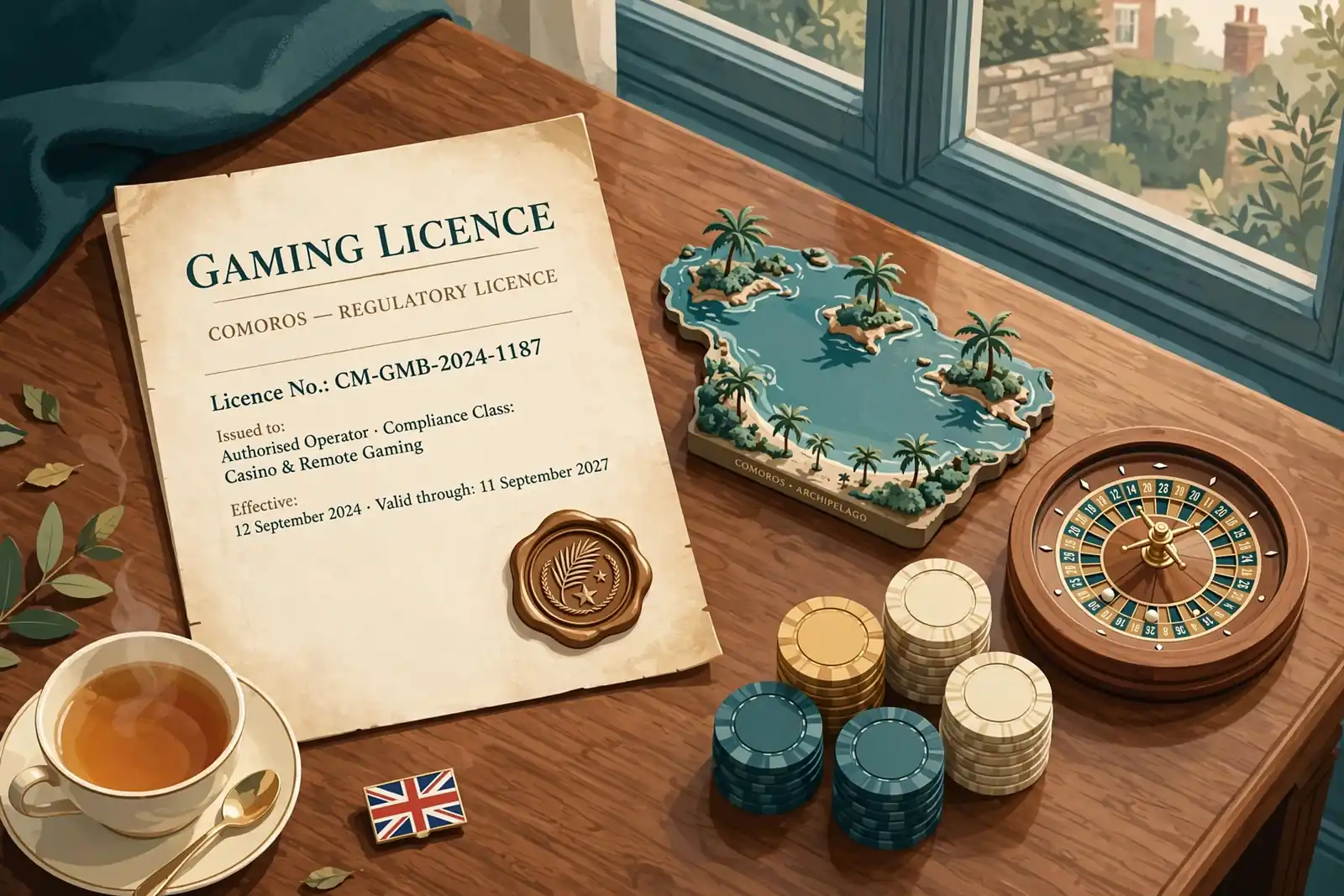
I used to read “no account” as “no questions later”. That was a poor assumption. A lighter sign-up flow can still leave identity or payment-ownership questions to be answered before a withdrawal. The point at which you want your money back is exactly when an operator may need to check that the person requesting it is the player and that the payment method belongs to them.
That does not mean every player will face the same request, or that a check will always happen at the same stage. It means you should not treat a quick entry as proof that verification has been skipped. The operator may ask for information before releasing a withdrawal, even if you were able to start playing with very little account setup.
The practical distinction is between fewer steps at the beginning and no checks at all. Those are not the same thing. A page can make the first part feel almost account-free, while the later cash-out process still depends on confirming details. If you only judge the experience by how quickly you get to the games, you are judging half the process.

Before depositing, I would look for a clear explanation of what happens when you request a withdrawal and what details may need confirming. If that information is hard to find, do not fill the gap with the assumption that “no account” means anonymous or paperwork-free. It is a marketing description, not a guarantee about every later step.
Keep your payment details consistent with your own identity, and make sure you understand the operator’s withdrawal process before you commit money. That is less exciting than the headline, but it is the part that matters when you stop playing.
Short version: fewer opening steps, not necessarily fewer checks.
Looking for an online casino without the usual signup—what to check
The phrase “no account” can make a casino sound like it has removed the boring part and left the games. I get the appeal. I have clicked through enough glossy pages to know, though, that a neat label tells you what a site wants you to notice—not whether it is allowed to offer gambling to people here.
For a player in Great Britain, start with the operator’s licence. A business offering remote gambling to consumers in Great Britain needs the relevant Gambling Commission licence. That requirement does not disappear because a site calls itself an online casino without an account, says it uses a quick payment route, or promises fewer steps at the start.
Check who is actually operating the site
Before judging how simple the signup looks, identify the business behind the casino. A brand name on a page may not be the same name as the company running it, so look for the operator details in the site’s legal or footer information. Then check whether that operator holds the relevant Gambling Commission licence for its service.
- Identify the business operating the site
- Match the operator name with the Gambling Commission register
- Check the legal or footer information for company details
- Trust a “licensed” badge as proof
- Rely on a polished page design for reassurance
- Guess the operator’s identity if it is hidden
I would not treat a badge, a line of text saying “licensed”, or a polished-looking page as the check itself. Those are claims made on the site. The point is to match the operator you have identified with the regulator’s information, rather than taking the casino’s own wording as proof.
If the site makes the operator hard to identify, that is a reason to pause. You should not have to guess which business is responsible for the gambling service. I have made the mistake of letting a familiar-looking brand and a tidy homepage do the reassuring for me. It was reassurance on credit.
Treat “best” as a claim, not a finding
There is no useful shortcut in a label such as “best no-account casino”. “Best” might refer to the speed of reaching a game, the payment options, the way the site looks, or simply the wording used in an advert. None of those tells you whether the operator is authorised to serve Great Britain.
That is why I would separate two decisions. First, is the operator properly licensed for the market? Then, if it is, does the way it presents its service suit what you want? Reversing that order is easy: a site catches your eye, the no-account promise sounds convenient, and you start weighing features before checking the basic point.

The same goes for lists of online casinos that advertise no-account play. A list can help you discover brands, but its presence does not establish that each one is licensed. Nor does a ranking turn the top entry into a safer choice. Check the operator, not the position it has been given on someone else’s page.
Be careful with lookalike reassurance
Casino pages can use confident language without making the underlying operator any clearer. If the brand name, company details and licence information do not line up in a way you can understand, do not fill in the gaps yourself. A familiar payment logo or a statement about a smooth experience answers a different question from whether the business is licensed to offer remote gambling to consumers in Great Britain.
I also try not to let “no account” become a reason to skip ordinary scrutiny. The phrase describes a style of service, not a regulatory category. It does not create an exception for the operator, and it does not make a licence check unnecessary. The convenience pitch and the licence check are separate things.
When comparing an online casino that advertises no account with one that uses a more familiar signup, I would apply the same test to both. The format does not change the requirement. If the operator is not clear, or you cannot establish that it holds the relevant Gambling Commission licence, I would leave the comparison there rather than trying to rescue the offer with a guess.
License Verification
- Find the operator’s legal business identity
- Verify the operator on the Gambling Commission public register
- Confirm the brand/domain matches the registered business
- Ensure the operator is authorized for the Great Britain market
A quick check before you go further
Keep the first pass simple: find the operator’s identity, verify its position with the Gambling Commission, and make sure you are looking at the same business rather than relying on a brand claim. If those details are unclear, that is already useful information. You do not need to keep weighing design, convenience or “best” labels while the basic question remains unanswered.
I still look at new formats because some are genuinely more convenient to use. But convenience is not the first filter. A no-account casino can change how the service is presented; it cannot replace the operator’s responsibility to be licensed for the Great Britain market. Start there. Then decide whether the rest is worth your attention.
Bonus wording is where the small print bites
A bonus can look generous in a headline and feel very different once you open the terms. I learned to stop treating “free” as a description of the money I could actually take away. It is a label for an offer, and the conditions underneath decide what it means.
That matters whether you are looking at a deposit offer, an incentive attached to slots, or a no-deposit promotion. The wording should tell you what the bonus applies to and what you must do before any bonus-related winnings can be withdrawn. If the headline is clear but the important conditions are hard to find, I would not fill in the gaps with the interpretation I happen to prefer.

Read the wagering requirement as a whole
A wagering requirement describes how much play is required against bonus funds before the relevant balance can be withdrawn. The multiplier alone is not the full story: check what amount it applies to, which games count, and whether the offer puts any other conditions on using or withdrawing the funds. Those details belong to the specific promotion, so I would not assume that one casino’s terms also apply to another offer on the same site.
There is also a Great Britain rule change to take into account. A specialist review of the change reports that, from 19 January 2026, UK Gambling Commission rules limit wagering requirements on bonus funds to 10 times for incentives aimed at Great Britain. Treat that as a rule about the permitted requirement, not a promise that every offer will use the full allowance or that a bonus will be easy to clear. The offer’s own terms still matter.
I used to glance at the multiplier, decide it looked manageable, then discover I had not checked what counted towards it. That is where the headline stops helping. Look for the eligible games and the contribution rules in the actual offer terms; don’t assume every slot or casino game contributes in the same way.
One incentive should not bundle different gambling products
The other point worth checking is what the promotion covers. A single incentive cannot combine more than one gambling product type. So if an offer appears to cover casino play alongside another kind of gambling, pause and read the wording carefully rather than treating the bundle as a harmless extra.
Attention: A single incentive cannot combine more than one gambling product type. If an offer bundles different products, read the terms carefully.
This is not the same as a site having more than one product available. The restriction concerns what is combined within one incentive. A casino promotion should be assessed on its own stated scope, and the terms should make clear which product the offer relates to. If the headline blurs that distinction, the small print deserves more attention, not less.
That can matter when a “no account casino bonus” is presented as part of a wider package. The label does not tell you whether the promotion is a casino incentive, what activity it applies to, or what conditions attach to it. Those answers need to come from the terms for that particular offer.
Check the conditions before you opt in
I now read the conditions before deciding whether an offer is worth my time. First, identify whether it is a deposit bonus or an offer that does not require a deposit. Then check the stated wagering requirement and what funds it applies to. Finally, look for the qualifying games, contribution rules and any limits on how the promotion can be used or withdrawn.
The key is not to invent a favourable meaning when the wording is vague. If the offer says “selected games”, find the selection in the terms. If it gives a wagering figure, check its basis. If the rules are difficult to locate or do not explain what the promotion covers, I would leave it alone rather than assume the missing detail will work in my favour.

There is no useful “list of no account casino sites” that can settle those questions for every bonus. Terms can differ between promotions, and a familiar site label does not make one offer’s conditions transferable to another. I would judge the promotion in front of me, not a phrase suggesting that every no-account casino bonus works alike.
The same goes for claims about a no-deposit casino bonus or an offer attached to slots. The headline may describe the attraction; it cannot replace the full terms. “No deposit” tells you something about how the offer is presented, not whether its conditions suit you. “Bonus spins” tells you the format, not the rules governing any resulting balance.
A bonus is only as clear as its conditions. Read those first.
A no-account casino review should look past the first deposit
A first deposit can make the whole process feel settled. You enter a few details, choose a payment route and get into the games. I used to treat that smooth start as proof that the casino would be just as straightforward when I wanted my money back. It isn’t proof of much.
A useful no-account casino review should spend time on the point where you ask to withdraw. That is when identity or payment-ownership questions can arise. The process may feel different from the quick entry implied by “no account”: the operator might need to establish who you are or confirm that the payment method belongs to you before it can release funds.
An operator may require identity or payment-ownership verification before releasing a withdrawal, regardless of how simple the initial signup was.
That doesn’t automatically mean something has gone wrong. But it does mean a review that only describes registration, the lobby and the first deposit leaves out the part that matters when you’re trying to cash out. I’ve made that mistake. The welcome looked simple; I hadn’t thought through what would happen later.
What a useful review should tell you
Look for an account of the withdrawal process, not just a claim that withdrawals are easy. Does the reviewer explain what happened after requesting a payout? Were they asked for identity or payment-ownership information? Was the request paused while those questions were handled? A clear description is more useful than a row of cheerful adjectives.
There is a difference between saying a casino has a no-account entry route and saying that no checks will ever be needed. The first describes how play begins. The second is a promise about what happens later, and a review should not make it casually. If a reviewer’s account stops before withdrawal, treat their experience as incomplete.
Pay attention to whether the review separates what the reviewer personally experienced from what the operator’s terms say. A single player’s smooth withdrawal doesn’t establish that every future request will follow the same path. Equally, a request for documents in one account doesn’t prove that every player will be asked for the same things. Reviews are most useful when they describe the event without turning it into a guarantee.

Read the cash-out account, not the mood
The tone of a review can hide gaps. “No hassle” sounds reassuring, but it tells you little unless the writer explains what they actually did. Did they make a withdrawal request? Did they receive a question about who owned the payment method? Did they describe the steps they took to answer it? If none of that appears, the review may be about the deposit experience dressed up as a complete verdict.
I also look for a distinction between the operator’s stated process and the reviewer’s own outcome. Those are not interchangeable. A review can report what happened to one person; it can’t guarantee that your request will be identical. Keep that in mind when several no-account casino reviews repeat the same broad claim but offer no detail about the point of withdrawal.
The phrase “instant cash-out” can be especially slippery. It may describe the time taken to submit a request, not the time until the money reaches you. If a review uses it, check whether the writer explains the sequence: request, any questions raised, approval, then payment. Without that, the phrase is mostly atmosphere.
A practical way to judge the experience
Before treating a review as a guide, ask yourself whether it covers both ends of the journey. Does it describe how play starts, and what happened when the reviewer tried to withdraw? Does it mention whether identity or ownership questions came up, without pretending that one person’s experience predicts yours? If the cash-out part is missing, the review hasn’t tested the full claim.
Reviewing Casinos
- Check for accounts of the actual withdrawal process, not just deposit ease
- Look for details on identity checks and payment-ownership questions
- Distinguish between a reviewer’s personal experience and the operator’s official terms
- Be skeptical of phrases like “instant cash-out” without a detailed sequence of events
I don’t expect every review to read like an investigation. I do expect it to say what was actually checked. A no-account casino guide that explains the limits of its own experience is more credible than one that presents a painless first deposit as the whole story. And when no-account casino bonuses dominate the review, remember that promotion details don’t tell you how a withdrawal request will be handled.
The first deposit is the easy scene to describe. The real test comes later.
Mobile play and real-money payments are not the same thing
Playing on your phone and paying through your phone bill sound like one thing until you try to move money back out. They are separate choices. A casino can work on a mobile screen while the available deposit and withdrawal routes follow their own rules.
Pay by mobile means the deposit is charged to your mobile account or phone bill rather than taken directly from a bank balance. That can feel neat when you are already using your phone, but it is a one-way funding route: money deposited this way cannot be returned to your phone bill as a withdrawal. If you win, you need another way to receive the payout.
That distinction caught me out early on. I treated the button I used to put money in as if it would also solve the cash-out. It didn’t. Before depositing, I now check the payment terms for both directions, not just whether a method appears at checkout. A deposit method may not be available for withdrawals. Simple, but easy to miss.

There is also a ceiling to keep in mind. A specialist payment review states that the monthly carrier-billing limit is £240. Treat that as a constraint on deposits, not as a target or a reason to spend more. If you are trying to keep spending within a personal limit, a payment route with a fixed cap is not a substitute for setting one yourself.
A mobile casino, meanwhile, just means you can access the site on a phone. It does not tell you whether phone-bill deposits are offered, what other payment routes are available, or how you will receive a withdrawal. The word “mobile” describes the screen; it says little about the movement of real money.
When I check a payment page now, I look for the deposit option and the withdrawal information separately. If the latter is vague, I don’t assume the deposit method will work in reverse. I also avoid treating a quick-looking payment step as proof that the whole money journey is straightforward. The important detail is where the funds can go after a deposit, not just how easily they leave your phone account.
For no-account play, that practical distinction still matters: a shorter-looking route into a game does not change the limits of carrier billing. Know what can be charged, and what cannot be paid back to your bill. No shortcut there.
Payment Limits
Money deposited via mobile carrier billing cannot be returned to your phone bill as a withdrawal; you will need an alternative method to receive winnings.
Checking a newly launched casino before you trust the label
“New” is a marketing description, not proof that a casino is authorised to serve players in Great Britain. I’ve learned not to let a fresh-looking site, a no-account promise or a polished launch page do the checking for me. The useful question is whether the operator behind it can be matched to a current entry on the Gambling Commission’s public register.
That match needs to be exact enough to mean something. Check the business name and the brand or domain the site uses; don’t assume that a familiar-looking logo, a registration flow or a page saying “UK players welcome” establishes its status. If the brand name differs from the company name, look for a clear connection between them rather than filling in the gap yourself.
A dated example shows why that matters. A specialist casino review reported that a check of the Commission’s public register dated 26 September 2026 did not identify a LuckyPays entry under that brand or its stated domain, including luckypays.io. That is a finding tied to that register check and date, not a timeless verdict on what might appear later. It is also not an endorsement of any alternative. The practical lesson is simpler: when a site calls itself new, check the register yourself and confirm the result against the exact brand and web address you intend to use.
If you cannot make that connection, pause. Don’t treat the absence of an obvious match as a minor paperwork wrinkle, and don’t let a quick route to play substitute for evidence. A no-account setup may reduce the steps before a deposit, but it does not make the operator’s identity or regulatory status irrelevant.

I’d also repeat the check if the site changes its name or domain. A result you saw earlier can become stale, while a new label can make an old operation look like a new arrival. Keep the check anchored to what is live now, not a screenshot, an advert or somebody else’s summary. New is a claim. Verify it.
Free spins and no-deposit offers: read the terms, not the headline
A “free” offer can still come with a fairly narrow set of conditions. In a specialist review, no-deposit spin offers are described as typically giving 10–30 spins, tied to nominated slots. That tells you the sort of scale being discussed, not that a particular casino has the promotion live today. I’ve made that mistake before: I saw a headline, assumed the deal was waiting for me, then found different terms when I reached the offer page.
No-deposit credit bonuses are described in the same kind of review as usually worth £2–£10, with wagering requirements often set at 30–60 times the bonus. The number on the banner is only the starting point. Check what amount the wagering applies to, and whether the offer is actually available in the operator’s current promotion terms. “No deposit” does not mean “no conditions”.
For spins, look for the named games and what happens to any winnings. For credit, read the wagering requirement carefully before deciding whether the headline amount is worth your time. If the promotion page does not make the conditions clear, I would not treat a third-party description as proof of a live offer.
Typical bonus ranges
No-deposit spin offers typically provide 10–30 spins on nominated slots, while no-deposit credit bonuses are usually worth £2–£10, often with wagering requirements of 30–60 times the bonus.
That sounds less exciting than the banner. Good. A typical range is context, not a promise, and a promotion can change or disappear. The operator’s current terms are what matter when you are deciding whether to claim. My old habit was to focus on the free part and skim everything after it. I stopped doing that once I realised the small print was the offer.
Trustly and “no account”: check where the money can go
Seeing Trustly mentioned beside a no-account casino does not tell you whether it is available there, or whether it can be used to withdraw. I would check the cashier’s current payment information rather than assume the label covers both directions. A way to pay in is not automatically a way to get money out.
I used to read a payment logo as a complete answer: if it handled the deposit, surely it would handle the payout too. That is an easy assumption to make when the cashier puts the options together. But the two jobs are separate, and the terms should say which methods are available for each.
For a UKGC-licensed casino, withdrawals must be processed through an alternative method. That could be a bank transfer, debit card or regulated e-wallet. So if you are considering a Trustly deposit, look for the stated cash-out route as well. Check whether the casino names that route clearly and whether it suits you before you put money in.
The practical test is simple: can you identify how a withdrawal would reach you without relying on the deposit method being reusable? If the cashier only explains how to fund play, keep looking for the withdrawal information or ask the operator before depositing. A vague payment badge is not an answer.

“No account” describes the signup experience, not the path your money takes back to you. Trustly may appear in a casino’s payment options, but that alone does not establish availability, terms or withdrawal support. Read the operator’s own payment details, and treat deposit and withdrawal as separate decisions.
Small detail. Big difference.
Paysafecard deposits don’t settle the withdrawal question
Paysafecard can look like a neat fit when you want to fund a casino without handing over card details. But a deposit method and a way to receive winnings are separate things. I used to treat the payment button as a clue to the whole cash-out process. It isn’t.
That matters especially when a site promotes a no-account route. Paying with a voucher does not establish that the operator can return a withdrawal through the same channel, or that no further steps will be needed. Check the cashier’s withdrawal options before depositing, and read the payment terms rather than relying on the logo beside the deposit button.

For a UKGC-licensed casino, withdrawals have to be processed through an alternative route, such as a bank transfer, debit card or regulated e-wallet. So don’t assume that Paysafecard itself will be the destination for your money. The practical question is what receiving method the casino supports and whether you can use it.
I learned to check that before paying, not after a balance is sitting there. A method that works for getting money in may not work for getting it out. That distinction is easy to miss when the deposit page is the first thing you see.
If the cashier does not make the withdrawal route clear, contact the operator and get the answer before funding the account. Keep the reply, too. It gives you something concrete to refer back to if the available options at cash-out do not match what you expected.
Paysafecard may suit the deposit side. It does not, by itself, settle how a withdrawal will reach you. Check both directions first.
Can you withdraw to your phone bill when paying by mobile?
No. Pay-by-mobile is for deposits only; withdrawals must use another method, such as a bank transfer, debit card or regulated e-wallet.
What is the maximum wagering requirement in Great Britain?
For bonus funds, the maximum wagering requirement is 10 times the bonus amount.
Is LuckyPays licensed by the UK Gambling Commission?
The UK Gambling Commission register does not list LuckyPays under that brand or its stated domain, luckypays.io. Remote operators serving Great Britain need the relevant Commission licence.
Which payment types are listed?
Boku and Payforit are listed for mobile deposits. Withdrawals must use another method, such as bank transfer, debit card or a regulated e-wallet.
Is there a “no verification” pay-by-phone casino?
Pay-by-phone does not guarantee that you will avoid verification; identity or payment-ownership checks may arise before a withdrawal.
Prepared by the Tenobet Casino 1 editorial staff.