French Roulette Online Casinos in the UK: Rules
 Available in GB
French roulette uses a single-zero wheel, and La Partage or En Prison can change what happens to even-money stakes when zero lands.

Table of Contents
- French Roulette’s Zero Rule Is the Point
- How French Roulette Compares with American Roulette
- Live French Roulette: A Real Wheel, With UK Safeguards
- Low, Standard or VIP Limits: Pick a Pace You Can Afford
- Online French Roulette: RNG Spins and What to Check
- Finding a UK Casino That Actually Offers French Roulette
- Premium Play and the Small Print on Bonuses
- Roulette Bets: What the Payouts Actually Say
- Playing French Roulette Online Without Chasing Losses
- The Casino Roulette Session: Live Dealers and Real-Time Spins
French Roulette’s Zero Rule Is the Point
The useful thing to understand about French roulette is not a special betting pattern or a promise of better results. It is what happens when the ball lands on zero. That single pocket changes the maths of an even-money bet, provided the table applies La Partage or En Prison.
The wheel has 37 pockets: numbers from 1 to 36 and one zero. On a standard European layout, that gives the game a house edge of 2.70%. The zero is the reason an even-money wager does not have perfectly balanced chances. A red bet, for instance, can win when the ball lands on red, but zero is neither red nor black. Without a rule that softens its effect, a zero makes the red bet lose just as a black result would.
That is easy to overlook when you are watching a spin. I used to focus on the colour or number I had chosen and treat zero as just another result on the board. It isn’t. It is the pocket that gives the casino its advantage over time, even when your bet looks like a simple choice between two sides.
When choosing a UK casino for French roulette, check that the game is available and consider how quickly you may receive a payout. The details below give you the stated payout speed for each listed option.
Payout speed: 1-3 business days NightLuck lists a payout speed of 1–3 business days. You can use this as one point of reference while checking whether French roulette is available.
Payout speed: 1-3 business days WinBeast lists a payout speed of 1–3 business days. If French roulette is available, this payout estimate may help inform your choice.
Payout speed: 1-3 business days NightWin lists a payout speed of 1–3 business days. Check French roulette availability separately before deciding if it suits your needs.
Payout speed: 1-3 business days BeOnBet lists a payout speed of 1–3 business days. You may want to confirm that French roulette is offered before choosing it for that game.
Payout speed: 1-3 business days Revery Play lists a payout speed of 1–3 business days. This gives you a payout estimate to consider alongside French roulette availability.
Payout speed: 1-3 business days Britsino lists a payout speed of 1–3 business days. You should check whether French roulette is available, as no game details are provided here.
Payout speed: 1-3 business days EvoSpin lists a payout speed of 1–3 business days. Treat this as a payout reference and verify French roulette availability separately.
Payout speed: 1-3 business days Chanze lists a payout speed of 1–3 business days. You can consider this estimate, but the available details do not confirm French roulette.
Payout speed: 1-3 business days Zombillion lists a payout speed of 1–3 business days. Check the casino’s game offering to confirm whether French roulette is available.
Payout speed: 1-3 business days Jetsetspins lists a payout speed of 1–3 business days. You have a stated payout estimate, while French roulette availability remains to be checked.
La Partage changes the outcome for even-money bets. If the ball lands on zero, half of the stake is returned instead of the whole wager being lost. The other half is lost. That partial refund reduces the house edge on those bets from the European roulette figure of 2.70% to 1.35%.
The difference is meaningful, but it is not a way to make a bet safe. You can still lose the full stake when the ball lands on the other colour, or when an even-money choice such as odd or high fails. La Partage only changes what happens on zero; it does not protect you from ordinary losing results. The advantage is narrower than the phrase “French rules” can make it sound.
En Prison offers another way for zero to affect an even-money wager. Instead of immediately settling the stake as a full loss, the bet is held for the next spin. Its eventual result depends on that subsequent spin and the table’s stated rules. The point is that zero does not simply take the whole stake at once. Before you play, check whether the table uses En Prison, La Partage, or both, and read how it resolves a held bet. The label alone is not enough.
These rules are why French roulette has the lowest house edge among standard variants: La Partage and En Prison reduce the cost of zero for eligible even-money bets. They do not remove the house edge, and they do not make every type of wager receive the same treatment. If you place a bet that is not even money, do not assume that La Partage will refund part of it. The protection discussed here is specifically about even-money bets.

That distinction matters when comparing a French roulette table with another table that also has a single-zero wheel. The wheel itself can look familiar, but the rule printed beside it changes the expected loss on the bets it covers. If you are choosing an online French roulette game, look for the rules panel before you place a stake. I have skipped that step before, seen “French” in the title and assumed I knew what would happen on zero. A title is not a rulebook.
Nor does the lower edge tell you what will happen in a short run. A run of wins can feel like proof that you have found a method; a run of losses can make the partial refund seem almost irrelevant. Neither feeling changes the wheel’s probabilities. The edge is a long-run measure of the game’s mathematics, not a forecast for your next spin or a guarantee about the session you are having.
So, when you see French roulette offered online, check the treatment of zero first. With La Partage, half of an even-money stake comes back when zero appears, and the edge on that kind of bet is 1.35%. With En Prison, the stake is held for resolution under the table’s rule. That small line in the rules is the real distinction—not a lucky system, and not a promise that the wheel will be kind. Zero still matters.
How French Roulette Compares with American Roulette
The easiest way to compare roulette variants is to look at the wheel before you look at the betting layout. On a European wheel, there are 37 pockets: numbers 1 to 36 and one zero. American roulette adds a double zero, taking the total to 38. That extra green pocket is the main reason the standard American game gives the house a larger mathematical advantage.
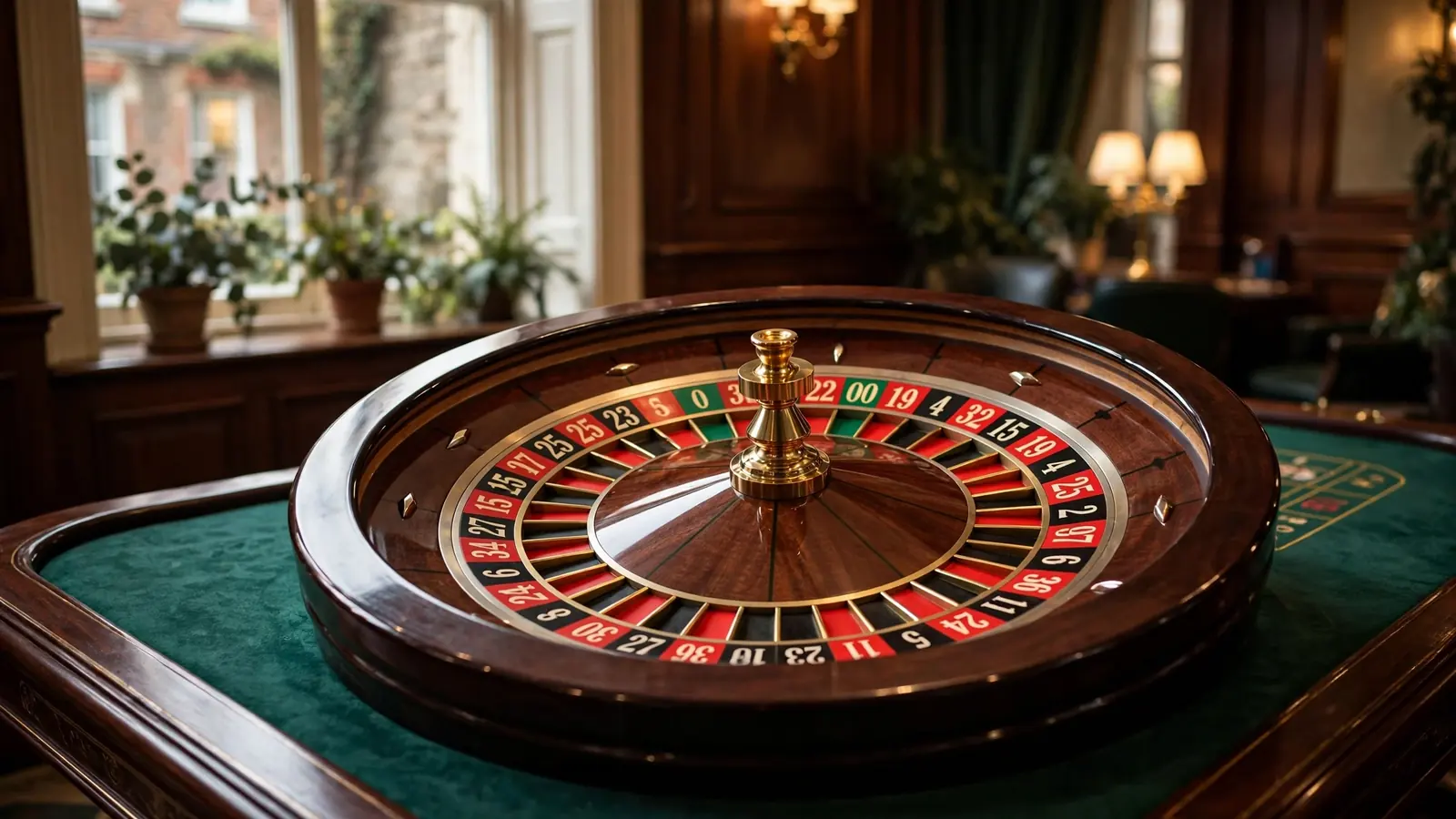
For a standard European game, the house edge is 2.70%. On American roulette, it is 5.26%. The difference can look small when you see it written down, but it changes the expected return across repeated bets. It does not tell you what will happen in one spin. A player can win on either wheel; the percentage describes the casino’s long-run advantage, not a prediction for your session.
I used to choose a table by its look and barely register the second zero. That was an easy detail to miss on a screen, especially when the layout looked familiar. Now I check the wheel’s green pockets before placing anything. One more pocket, different maths.
What changes on the American wheel
The double zero is not just decoration beside the single zero. It is another losing result for most bets that cover red or black, odd or even, or a range of numbers. Those bets still pay according to their stated odds, but the extra pocket makes the chance of winning them lower. The same principle affects number bets: the payout does not rise to compensate for the additional losing pocket.
The basket bet shows how sharply the house edge can vary even within one version. This American bet covers the zero, double zero, and the first two numbers; its house edge is 7.89%. That is higher than the overall American roulette figure of 5.26%. So “American roulette” does not mean every selection has one identical edge. The bet matters as well as the wheel.

A familiar layout can make the game feel interchangeable, but it is worth checking which pockets are actually on the wheel. If you see both 0 and 00, you are looking at standard American roulette, not the 37-pocket European arrangement.
The three-zero table
There is also a less familiar version to watch for online: a wheel with a third green pocket marked 000. A specialist review reports that this version has a house edge of 7.69%. Treat that as a specific reported variation, not a description of every American table offered to UK players. Table names can be broad; the wheel itself is the clearer clue.
Adding a third zero means more outcomes that are unfavourable to most ordinary bets. Before you join, inspect the wheel graphic and the game rules, rather than assuming that a table labelled “American” has only the single and double zero. If you cannot see the pocket arrangement clearly, the rules should identify the wheel variant. No guesswork needed.
This is one reason I don’t rely on a game title alone. A familiar label may not tell you whether the table has one, two or three green pockets, while that count directly affects the maths. The difference is visible once you know where to look.
Where French roulette fits
French roulette shares the 37-pocket arrangement of European roulette, but its rules can make the house edge lower on certain bets. In particular, La Partage and En Prison affect even-money bets when the ball lands on zero. With La Partage, the edge on those bets falls to 1.35%; European roulette without that rule has a 2.70% house edge. French roulette’s combination of rules gives it the lowest house edge among standard variants.
37 pockets (1-36 and one zero) with a house edge of 2.70%.
38 pockets (1-36, zero, and double zero) with a house edge of 5.26%.
37 pockets with the lowest house edge among standard variants due to La Partage and En Prison rules.
A specialist variation with three green pockets and a reported house edge of 7.69%.
That does not mean every bet at a French table has that reduced edge. The 1.35% figure applies to even-money bets under La Partage; it is not a blanket figure for every selection on the layout. If you are comparing games, keep the wheel count and the table rules in view together. The pocket count tells you the basic structure; the rules determine what happens on particular outcomes.
For a quick comparison, European and French roulette have one green pocket, while standard American roulette has two. The reported three-zero variation has three. That simple count explains why an American table generally gives the house more room, though the exact edge depends on the game and bet. I’d rather take a moment to confirm the wheel than assume two tables with similar layouts are mathematically alike.
French roulette can be the better fit if you want the lower edge its rules provide on eligible bets. American roulette is easy to recognise once you spot 00, but the extra green pocket comes at a cost in the odds. The third-zero version pushes that comparison further, so check the rules before you start. A table name is not the maths.
Live French Roulette: A Real Wheel, With UK Safeguards
A live French roulette table is not a sequence of animations generated by a game on your device. The casino streams a real wheel from a studio, where a human dealer sets the game in motion and the ball physically lands in a pocket. You watch that process through a video feed and place bets through the online interface.

That difference changes the feel of the game. There is a real wheel and a person dealing, rather than a software display presenting each result. I find that makes the pace easier to follow, but it does not make the result more predictable. The live feed is part of the experience, not an insight into where the ball will land.
The word “live” can do a lot of work in a game title. Before joining, check the table description to see whether it really is a streamed dealer table and whether it is French roulette. If you see “auto” in a title, do not assume it means the same thing as a human-dealt studio game: read the format details rather than relying on the label. The interface should make clear what you are watching and how to place a bet.
The safeguards should be visible too
For British players, the relevant regulator is the UK Gambling Commission (UKGC), which regulates online casino activity in Great Britain. UKGC-licensed operators must provide tools that let you manage play, not just a game screen and a balance display.
Those tools include deposit limits and loss limits, alongside session time reminders and reality checks. A reminder gives you a prompt to notice how long you have been playing; a reality check is another opportunity to pause and take stock. Cool-off periods and GamStop self-exclusion are also required options. They serve different purposes: a cool-off period lets you step away for a while, while self-exclusion is a way to block access to gambling accounts through GamStop.
- Set deposit and loss limits before you start
- Use session time reminders and reality checks
- Use cool-off periods or GamStop self-exclusion if needed
- Wait until a session goes wrong to set boundaries
- Rely on a prompt to make the decision to stop for you
- Treat safeguards as something to configure later
I used to treat those controls as something to set later, after a session had already gone the wrong way. That was backwards. It is easier to decide what boundaries you want when you are not reacting to a result or trying to win money back. Limits are not a guarantee that you will avoid losses, but they give you a way to define and enforce a stopping point.
Look for the controls in the account area before settling into a table. Check that you can find the relevant limit settings, reminders, cool-off option and self-exclusion information without having to hunt through unrelated menus. If you are already feeling pressure to keep playing, taking a break is more useful than relying on a prompt to make the decision for you. A table will still be there later.
Live play can feel absorbing because the dealer, wheel and video feed make the game seem immediate. That is exactly why the safeguards matter: a polished stream does not change the nature of gambling, and a real ball drop offers no special protection from a losing run. Use the tools before you need them. Then judge the table on what it actually provides—not on how convincing the studio looks.
Low, Standard or VIP Limits: Pick a Pace You Can Afford
A roulette table’s limit is not just a label. The minimum stake tells you what it takes to join a spin; the maximum tells you how large a bet the table accepts. “VIP” can sound like a different class of game, but the practical question is whether its limits suit your budget. A high ceiling is no benefit if you have no intention of betting near it.

For low-stakes play, the entry point can depend on the format. A specialist review reports that some UK live roulette tables accept a minimum of 10p, while some auto-roulette and speed roulette tables begin at 5p. Those figures describe possible starting stakes, not a promise that every French roulette table will offer them. The table information is worth checking before you sit down: a low minimum can make a format accessible, but it does not tell you how quickly you might spend.
Standard limits give you more room than a low-minimum table, but the word “standard” is not a fixed stake range. The minimum and maximum are set for the individual table, so check both rather than assuming its name tells you enough. If you want to keep each decision small, the minimum matters. If you tend to increase your stake when a session turns against you, the maximum matters too. It is easier to decide on a personal ceiling before the game starts than to invent one mid-session.
VIP tables are aimed at players who want higher limits. That does not make them better value or improve the underlying odds. It changes the size of the stakes the table allows. I have learned not to treat a higher limit as an invitation to prove anything; it is just a boundary on the table, not a target for me. If the minimum itself would make you uncomfortable, the table is a poor fit, however polished its presentation looks.
Then there is pace. A specialist review puts speed roulette at more than 150 spins in an hour, while a standard table is listed at 80 to 100. That is a meaningful difference in how often you get a chance to place another bet. If you are betting each round, more rounds can mean your decisions—and your spending—accumulate faster. “Fast” is a description of the format, not a reason to assume you will have a better session.
Speed roulette can feature more than 150 spins in an hour, compared to 80 to 100 spins at a standard table.
I used to focus on the stake printed beside the table and ignore how often I would be asked to make another choice. That was a mistake. A low entry stake can feel harmless, but repeated bets still add up. A losing streak can hit your bankroll, and changing tables from standard to VIP will not change the chance-based nature of roulette. It only changes the limits available to you.
Before joining, compare the minimum with what you are genuinely comfortable staking, then consider the maximum and the pace. Pick a table where you can leave the stake alone rather than feeling pushed to raise it. If the speed makes it hard to pause and think, choose a slower format or step away. No grand system needed. Just a limit you can keep.
Online French Roulette: RNG Spins and What to Check
An online French roulette game can run without a camera, studio or dealer. In an RNG version, software uses a random number generator to simulate each spin. The result appears on screen, and you place the next bet through the game interface. That makes it a different format from a live table, where a stream shows a physical wheel and ball.

I find the main practical difference is the pace. An RNG game can move straight from one result to the next, without waiting for a wheel to spin or a dealer to clear the layout. That can make a session feel brisk. It can also make it easy to lose track of how many rounds you have played. A quick interface is not a reason to raise your stakes or keep going longer than you meant to.
Minimum stakes can be lower than at a live table; RNG roulette may be available from as little as 10p. That is a possible starting point, not a promise that every game or operator will offer it. Check the table information before you join, and make sure the displayed minimum fits the amount you have set aside. I have learned not to treat a small opening stake as a reason to keep clicking.
Check the game’s RTP information
Before playing, look for the return to player, or RTP, information attached to the specific game. UKGC-licensed operators should make this information accessible to customers. It may appear in the game’s help or rules panel, or in the information shown before play. If it is not obvious, check the operator’s game details rather than assuming that every roulette title has the same figure.

RTP is a published theoretical measure of how much a game returns across a very large number of plays. It is not a forecast for your session, and it does not tell you what your next spin will do. A short run can look very different. I used to glance at a percentage and read it as reassurance; that is not what it means. It describes the game over the long run, not a personal result.
Check that the information belongs to the version you are about to play. A French roulette title may have more than one presentation or configuration, and a description for one game should not be treated as the details for another. The game rules and paytable can also confirm which version is open. Take a moment to read the on-screen information before staking money.
Keep the format in perspective
The fact that a random number generator determines each simulated spin does not make the game predictable. Past results on the screen do not provide a reliable guide to the next one. The software format changes how the game is delivered; it does not give you a way to call the outcome.
If you want French roulette online, make sure the game itself is labelled French roulette, then check its rules and RTP details before you play. An attractive layout or familiar name is not enough to establish what version you have opened. I now check the details first and decide on my stake before the first spin. Less guesswork.
Finding a UK Casino That Actually Offers French Roulette
I’ve learned not to treat a roulette banner as proof that the table I want is available. A casino may advertise roulette broadly while its lobby shows only other versions, or the French table may be listed under a slightly different name. Before opening an account, I check the game catalogue for “French Roulette” and read the table information rather than relying on a homepage promotion.
Look for the rules as well as the title. A listing should make clear which version you are opening and what rules apply. If the description is vague, or the game is absent from the lobby, ask the operator’s customer support before depositing. That simple check is less exciting than clicking straight through, but it saves the familiar annoyance of finding out later that the advertised game was not the one I expected.
Check the licence, not just the branding
For real-money gambling offered to customers in Great Britain, the operator must hold a relevant licence from the UK Gambling Commission (UKGC). It is the regulator for online casino activity in Great Britain. A polished site, a British-sounding name or a page that accepts a UK address does not establish that it has permission to serve you.
I check the UKGC public register and match the operator’s legal name and licence details with the information on its website. Do that before depositing, not after a problem appears. A platform without a valid UKGC licence cannot legally offer real-money live roulette to British residents. If the details do not match, or you cannot establish who operates the site, I would stop there rather than trying to explain away the mismatch.
The word “UK” in a site’s marketing is not a licence. Nor is a game being available in a browser proof that the operator is authorised to offer it here. Check the company behind the account, then check that company against the regulator’s register.
Complete the account checks first
A UKGC-licensed operator must verify your age before allowing you to deposit funds. You may be asked to provide information or documents during registration, and the timing can feel like a hurdle when you just want to get to the table. It is still part of the checks that apply to a legal gambling account. Don’t try to work around a request or send personal documents through an unverified channel; use the operator’s official account process.
You should also find the financial-limit controls in the account area. New customers must be prompted to set a financial limit before their first deposit, and operators must make account-level limit controls accessible. I look for those controls before playing, so I know where to return if I want to change my settings. If they are hard to find, ask support where they are rather than assuming they do not exist.
A few checks, then. Confirm the game is actually listed, verify the operator on the UKGC register, and complete the required account steps before depositing. That is a more useful starting point than trusting a logo or a promising headline.

Premium Play and the Small Print on Bonuses
“Premium” can make a roulette bonus sound like a perk for higher-stakes play. I’ve learned to look past the label. What matters is how the terms treat roulette, and whether the bonus funds are worth the restrictions attached to them.
A bonus may come with a wagering requirement: you have to place qualifying bets before the bonus funds, or winnings linked to them, can be withdrawn. Roulette does not necessarily count pound for pound towards that requirement. Most UK operators count roulette wagers at 10% to 20%, but the exact game weighting depends on the operator and offer.
That gap can make a bonus feel generous on the page and slow in practice. If you are considering a premium French roulette offer, check whether French roulette itself qualifies, whether live and RNG games are treated differently, and whether any maximum bet or time limit applies. The small print is the offer.
A specialist review reports that some operators give RNG roulette a 100% game weighting, while live roulette may count at 10% or 20%. Those are not universal terms, so check the offer’s own rules before you opt in. A live table you enjoy may move the wagering requirement along far more slowly than a software game. Or it may be excluded altogether. Either way, the game title alone does not tell you how much your wager counts.
There is also a UK-wide change to factor in. A specialist review reports that, from January 2026, the maximum wagering requirement for UKGC-licensed operators is capped at 10x. That ceiling does not make every bonus good value; game weighting and other restrictions still matter.
I’ve made the mistake of treating a bonus headline as money already in my account. It isn’t. Read the qualifying-game list and game-weighting terms first, then decide whether the offer suits the way you actually want to play. If the terms are hard to find, I’d leave it alone.
Roulette Bets: What the Payouts Actually Say
When I first sat down at a French roulette table, I found the layout less confusing once I stopped treating every chip placement as the same kind of bet. The main difference is how many numbers your stake covers—and how much a winning bet pays.

A straight-up bet covers one number. Put your chip directly on that number, and a win pays 35:1. In plain terms, a winning stake earns 35 times its amount, with the original stake also returned. It is the largest listed payout here, but it covers just one possible result. That trade-off is easy to understand; it does not make the bet more likely to win.
A split covers two neighbouring numbers. Place the chip on the line between them, and either number can make the bet a winner. The payout is 17:1, reflecting that the stake covers two numbers rather than one. I used to read the bigger payout as a reason to keep reaching for single numbers. It is only a payout description, not a forecast.
Outside bets cover broader groups. Red or black, even or odd, and high or low each pay 1:1. A win returns an amount equal to the stake, as well as the stake itself. These choices are easier to follow because the bet covers many outcomes, but the payout is correspondingly smaller than for a straight-up number or a split.
Those are the basic bet types you are likely to see while learning an online French roulette game: one number, a pair of adjacent numbers, or a broader outside group. The odds label tells you the return relative to the winning stake; it does not tell you how often a result will arrive. Keep those two ideas separate.
I also learned to check the table’s rules and paytable before placing anything. The bet name tells you what you have covered; the displayed payout tells you what a win pays. Neither changes chance into a plan. Simple enough.
Playing French Roulette Online Without Chasing Losses
A losing run can make the Martingale system look like a tidy answer: double your stake after every loss, then a win appears to recover what went before. I’ve found that logic persuasive when I’m annoyed and trying to get back to even. That is exactly when I’m least likely to think clearly.
The problem is that each new bet needs more money than the last. A streak of losses can push the required stake beyond what you can afford or what the table allows, before any hoped-for win arrives. The system does not make a losing run shorter, and it cannot promise that the next spin will be a winner. It just makes the cost of continuing rise quickly.

Roulette outcomes are determined by chance. No betting pattern can read the next result or predict when a run will turn. French roulette does not change that basic point: a strategy may organise how you stake, but it cannot control the wheel.
When I notice myself increasing stakes because I want to erase earlier losses, I take that as a cue to stop, not as proof that a recovery is close. Set a spending limit before you begin and do not raise it to chase a result. If the limit is gone, the session is over.
The blunt version: chasing turns a bad spell into a bigger risk.
The Casino Roulette Session: Live Dealers and Real-Time Spins
A live casino roulette session feels less like clicking through a game and more like sitting at the edge of a table. The stream shows a real wheel in a studio, a human dealer setting the round in motion, and the ball moving around the rim before it drops into a pocket. You are still watching through a screen, but the result comes from a physical spin rather than a software animation.
That difference changes the rhythm for me. In an RNG game, the spin is simulated and the screen moves straight into the next result. At a live table, you see the dealer and wheel; there is a little pause while the ball runs its course. I found myself following the spin instead of tapping through it. Less abstract. Still gambling.
If you are looking for French roulette at a casino, the live version gives you that same real-wheel scene, with the table layout and dealer visible in the stream. The camera view can make the action easier to follow, though it does not turn a roulette result into something you can read in advance. I have caught myself staring at the ball as if the extra few seconds might reveal a pattern. They do not.
The useful distinction is simple: live roulette means a streamed studio, a person dealing, and a physical ball drop; RNG roulette recreates the spin in software. Neither format makes the next pocket predictable. Pick the one whose pace and presentation you actually enjoy, rather than treating the live feed as a clue about what is coming.
Real wheel. No crystal ball.
Prepared by the Tenobet Casino 1 editorial staff.