
Online Casino Malta MGA Licence for UK Players
 Available in GB
An MGA licence relates to Malta, while remote gambling for consumers in Great Britain raises a separate UKGC licensing question.

Table of Contents
- An MGA Licence Is Not a UK Gambling Licence
- What “Best” Means When You’re Checking a Casino
- Casino Sites and the Claims They Make About Being Malta-Based
- MGA Casinos and GamStop: Know What You’re Stepping Outside
- Real-Money Play: The UK Licence Question Comes First
- Can an MGA Casino Accept Players from Great Britain?
- Bonuses: Read the Wagering Before You Deposit
- New Malta Casinos: Verify the Licence, Don’t Take the Badge on Trust
An MGA Licence Is Not a UK Gambling Licence
A Malta licence can sound reassuring when you are looking at an online casino, but it does not answer the most important licensing question for someone in Great Britain: does the operator hold a UKGC licence for offering remote gambling here? These are permissions from different regulators, operating in different jurisdictions. One does not stand in for the other.
I used to treat a licence badge as a general stamp of approval. If a site named a regulator and displayed a seal, I assumed the practical question had been settled. It hadn’t. The regulator named on a site matters, but so does the market the operator is serving. An MGA licence is relevant to the operator’s relationship with Malta’s regulator; it is not the UK operating licence required to provide remote gambling facilities to consumers in Great Britain.
That distinction is easy to lose when casino pages use broad phrases such as “licensed casino” or “regulated online play”. They can make the word licensed feel complete, as though there were just one authority and one permission that applied everywhere. There isn’t. A licence belongs to a regulator and a legal framework. The Malta Gaming Authority and the UK Gambling Commission are separate authorities, and an authorisation associated with one does not become an authorisation from the other.
Two regulators, two jurisdictions
The UK Gambling Commission licenses and oversees gambling in Great Britain. Under the rules for remote gambling, the operator’s physical address does not decide whether it needs a UKGC licence. If it provides remote gambling facilities to consumers in Great Britain, it must hold the relevant UKGC licence, whether its business is based in Malta or somewhere else.
So a Malta-based business is not exempt simply because its offices, registration or licence are outside Britain. Location and permission to serve a market are different questions. The address may tell you where an organisation is based; it does not, by itself, tell you which regulator has authorised its gambling services for people in Great Britain.

This is the point I now keep separate in my head: an online casino Malta licence may describe a Malta regulatory relationship, but it cannot be used as a substitute for the UKGC licence needed to provide remote gambling facilities to consumers in Great Britain. The Malta licence and the UKGC licence are not two names for the same document. They come from different regulators and answer different jurisdictional questions.
It can help to read a licensing claim as a specific statement rather than as a general endorsement. “The operator holds an MGA licence” tells you which regulator is being named. It does not, on its own, establish that the operator holds a UKGC licence. If you are trying to understand a site’s position in the British market, those are separate points to establish. A Malta badge does not settle the British licensing question. Two different checks.
What an MGA licence does—and does not—tell you
The MGA is the regulator named in an MGA licence. Among the relevant requirements for its licensees, player funds must be kept in segregated accounts at an approved financial institution. That is a concrete part of the Malta licensing framework, and it is more meaningful than a vague badge with no explanation attached.

But a requirement attached to an MGA licence should not be read as proof of UKGC oversight. Nor should it be assumed to give a player the same regulatory position as playing with an operator holding the UKGC licence required for Great Britain. The authority responsible for licensing a business in Malta is not the authority that licenses and oversees gambling in Great Britain.
This is where the language on casino sites can blur the edges. A page might describe a company as Malta-licensed, or refer to casinos licensed in Malta, and that may be relevant information about its status with the MGA. But it is not the same claim as saying that the operator has a UKGC licence. A Malta address, an MGA reference and a UK operating licence each mean different things; don’t let them collapse into one reassuring impression.
I’m not saying that an MGA licence is meaningless. It identifies a regulator and a set of requirements that apply to its licensees, including the handling of player funds. I am saying that its meaning has a boundary. It does not grant the UK permission that the UKGC requires from operators providing remote gambling facilities to consumers in Great Britain.
An MGA licence does not grant the permission required by the UKGC for operators providing remote gambling facilities to consumers in Great Britain.
That boundary matters most when a site’s wording makes the licence sound like a passport to every market. A licence issued by one authority should not be treated as universal permission. If the question is whether an operator is authorised to serve Great Britain, the relevant licence is the UKGC one—not a Malta licence, however prominently the latter is presented.
Great Britain is not the whole UK for this purpose
There is another distinction worth keeping straight. The UKGC’s jurisdiction under the Gambling Act 2005 covers England, Scotland and Wales. Northern Ireland is not regulated by the UKGC on the same basis; it has a separate regulatory regime.
That does not make “UK” and “Great Britain” interchangeable in every licensing discussion. The requirement described here concerns operators providing remote gambling facilities to consumers in Great Britain. The regulator and legal framework for Northern Ireland are not simply an extension of the UKGC’s remit.
I have seen how easily a broad “UK players” label can flatten those differences. But a phrase on a casino page does not change the reach of a regulator’s jurisdiction. For England, Scotland and Wales, the key licensing question remains whether the operator holds the UKGC licence required to provide remote gambling facilities there. Malta authorisation alone does not answer it.
In plain terms, the Malta Gaming Authority and the UK Gambling Commission are not interchangeable. An MGA licence can tell you that the operator has a relationship with Malta’s regulator and is subject to requirements connected to that licence. It does not tell you that the operator holds the licence required to serve consumers in Great Britain. For that, the relevant authority is the UKGC. Different regulator, different permission.
What “Best” Means When You’re Checking a Casino
If you’re reviewing online casinos for the UK in 2026, check the licensing details directly before deciding. The available information here is limited to the stated payout speed for each operator.
Payout speed: 1-3 business days NightLuck lists a payout speed of 1–3 business days. Use that as a stated timeframe, not a guarantee.
Payout speed: 1-3 business days WinBeast lists a payout speed of 1–3 business days. You can use this information when reviewing its payout expectations.
Payout speed: 1-3 business days NightWin lists a payout speed of 1–3 business days. This is the only operator-specific detail available here.
Payout speed: 1-3 business days BeOnBet lists a payout speed of 1–3 business days. You may want to confirm the timeframe with the operator.
Payout speed: 1-3 business days Revery Play lists a payout speed of 1–3 business days. No other operator-specific details are provided.
Payout speed: 1-3 business days Britsino lists a payout speed of 1–3 business days. Treat this as the stated payout speed rather than a guaranteed completion time.
Payout speed: 1-3 business days EvoSpin lists a payout speed of 1–3 business days. This is the available detail to consider when assessing its payouts.
Payout speed: 1-3 business days Chanze lists a payout speed of 1–3 business days. You can check with the operator for any further payout details.
Payout speed: 1-3 business days Zombillion lists a payout speed of 1–3 business days. No further operator-specific information is available here.
Payout speed: 1-3 business days Jetsetspins lists a payout speed of 1–3 business days. You may wish to verify the stated timeframe directly.
“Best” is a tidy word for a messy decision. A site can have a polished design, a big welcome banner and a Malta address, but none of that tells you whether it is authorised to serve the market you’re in. When I compare casinos, I start with the operating licence for the intended market. For play in Great Britain, that means checking for a UKGC licence, not treating a different regulator’s badge as a substitute.
That check comes before the games, the bonus and the overall look of the site. A list of MGA casinos, or a label such as “best Malta casino”, can describe where an operator says it is licensed; it does not settle whether it is properly authorised for British customers. I’d look for the operator’s legal identity and confirm the relevant licence with the regulator, rather than relying on a logo or a line in the footer. If those details do not match, I would stop there. No offer is worth guessing.
Look beyond the badge
Once the licence question is clear, check what the operator actually commits to providing. The protections attached to a UKGC licence are more useful to me than vague claims about being “safe” or “trusted”. UKGC-licensed operators have to give customers ways to set deposit and loss limits, manage session time and use reality checks. Those are practical controls, not proof that nobody can run into trouble, but they are things you can look for in the account and play settings.
- Look for the responsible-gambling area
- Check if controls are explained plainly
- Verify that limits are easy to find
- Rely on reassuring language alone
- Ignore hard-to-find tools
- Trust a badge without usable controls
I’m wary of a site that uses reassuring language while making its tools hard to find. Before depositing, I’d look for the responsible-gambling area and see whether the controls are explained plainly. Can you find the limits and session reminders without hunting through promotional pages? Are the options described clearly enough that you understand what they do? A badge may be easy to display. Usable controls matter more.
Game integrity is another part of the picture. UKGC-licensed operators are required to use games that have been tested and certified by testing organisations the Commission approves. That does not mean every game will suit you, or that you will win. It does mean the operator is subject to a defined requirement about the games it offers, rather than asking you to take a general promise on trust.
Know what happens if something goes wrong
I used to treat a complaints link as page furniture. Then I realised the important thing is not whether a link exists, but whether you can tell what to do with it. For a UKGC-licensed casino, start by raising the issue with the operator and keeping a record of the exchange. If it is not resolved, the complaint can go to the operator’s approved Alternative Dispute Resolution provider. If that process still does not resolve it, the Gambling Commission is the next point of escalation.
That is a route with distinct steps. It is not the same as assuming that a regulator will settle every disagreement directly, and it is not a reason to skip the casino’s own complaint process. Before you play, look for the operator’s complaint instructions and the details of its ADR provider. If the information is missing, unclear or buried under sales copy, that is useful information about how much effort you may have to make later.

I would also separate a complaint about an account or transaction from dissatisfaction with a game result. The process is there to handle complaints; it is not a promise that every disputed outcome will be reversed. Keep your description specific and save relevant messages. Less drama, more detail.
Put the checks in the right order
When people ask me what makes a Malta casino one of the better choices, I don’t begin by sorting sites into a “best” list. I ask which market they intend to serve, whether they hold the operating licence required there, what player controls apply, and how a complaint would move from the operator to an independent dispute service. Only after those basics would I spend time comparing the games or reading an offer.
That order matters because a strong-looking bonus cannot repair a licensing mismatch, and a large game catalogue cannot tell you how a dispute is handled. Nor does a Malta connection, by itself, answer those questions. The same checks apply whether you found the site through a recommendation, a list of MGA-licensed casinos or its own advertising.
My old mistake was to let the presentation do the checking for me. A clean homepage feels reassuring; it proves very little. Write down the operator’s name, confirm the licence for your market, then inspect the protection tools and complaint route. If any of those pieces are hard to establish, move on rather than filling the gaps with optimism. That’s a better test than “best”.
Checking a Casino
Note the operator’s legal name from the site’s terms and conditions.
Verify the operator’s UKGC status for your specific market.
Check the available player protection tools and the complaint route.
Casino Sites and the Claims They Make About Being Malta-Based
A Malta address can sound reassuring. So can a Maltese flag in the footer, a “Malta-based” label or a badge carrying the Malta Gaming Authority’s name. But those are claims about a site, not proof that the company operating it holds the authorisation it says it does.
I’ve learned not to let a polished page do the checking for me. The useful question is not just where a casino says it is based. It is which legal company runs the site, which regulator is said to oversee that company, and whether the claim can be verified independently. Location and licensing are related, but they are not interchangeable.
Start with the company behind the site
Look for the operator’s full legal name in the site’s terms and conditions, usually in sections about the company, governing rules or complaints. A brand name may not be the name of the company that operates it. Write down the exact legal name rather than relying on a logo or a short name in an advert.
Then compare that name with the licence information the site displays. Check whether the wording identifies the same company, rather than a different group company or a service provider. If the site gives a licence number, treat it as something to verify, not as proof by itself. A number printed on a page is still only a claim until it matches information from the regulator.

For a Malta claim, use the Malta Gaming Authority’s own information rather than a casino’s page or a list assembled by a comparison site. Search for the company name and compare the relevant details carefully. A near match is not enough: spelling, company suffixes and the identity of the operator matter. If the regulator’s information does not support what the casino says, pause. Don’t fill in the gaps with guesswork.
Separate a Malta address from a Malta licence
A registered address, contact address or office location does not establish that a casino holds an MGA licence. Nor does a statement that a company is incorporated in Malta. Those details may tell you something about the business’s claimed location, but they do not answer the separate question of regulatory authorisation.
I’d also be wary of wording that blurs these ideas together: “licensed in Malta”, “Malta casino” and “MGA-regulated” are not equivalent descriptions. Check what the site actually claims and who the claim applies to. If the wording is vague, look for the named operator and regulator, not a more comforting interpretation.
This applies to pages promoting Malta online casino bonuses or Malta online slots, too. A promotion, game catalogue or Malta-themed design says nothing on its own about the operator’s licence. The sales pitch can be accurate about what is on offer and still leave the important company details unclear. Read the small print before treating the headline as evidence.
Check the source, not just the badge
A regulator’s logo is easy to display. It is not an independent confirmation. Use the regulator’s own published material to check the operator’s identity and the status claimed by the site. If the site links to a licence page, open it and make sure it leads to the regulator rather than to another page controlled by the casino.
Licensing Mismatch
If the regulator’s information does not support the casino’s claims, or if legal names do not match, stop and resolve the discrepancy before depositing.
Be alert to mismatches. The website may name one company in its footer and another in its terms. A licence claim may refer to a company whose name does not appear in the casino’s legal documents. Or the site may describe itself as Malta-based while offering no clear account of who operates it. None of those details proves fraud on its own, but each is a reason to stop and resolve the discrepancy before relying on the claim.
The same care applies when a site calls itself one of the “best” or “top” Malta casino sites. That is promotional language, not a regulatory category. I used to read confident wording as if someone had already checked it. That was a lazy shortcut. Verify the underlying operator and licence yourself.
Keep the UK question separate
A Malta claim cannot tell you whether the UK Gambling Commission has authorised a site to serve customers in Great Britain. The UKGC does not approve offshore licences, has no reciprocal agreement with offshore regulators, and does not handle complaints about operators licensed outside the UK. So an MGA badge should not be read as a UKGC endorsement or as a route to UKGC complaint support.
That distinction matters even when every detail on a Malta page looks consistent. You are checking two different claims: whether the Malta authorisation is genuine, and whether the operator is authorised for the market you intend to use. One does not answer the other.
A Malta address may be real. A licence badge may look convincing. Still, I wouldn’t deposit on appearance alone. Match the operator, check the regulator’s own information, and treat unexplained discrepancies as a stop sign. Appearance isn’t verification.
MGA Casinos and GamStop: Know What You’re Stepping Outside
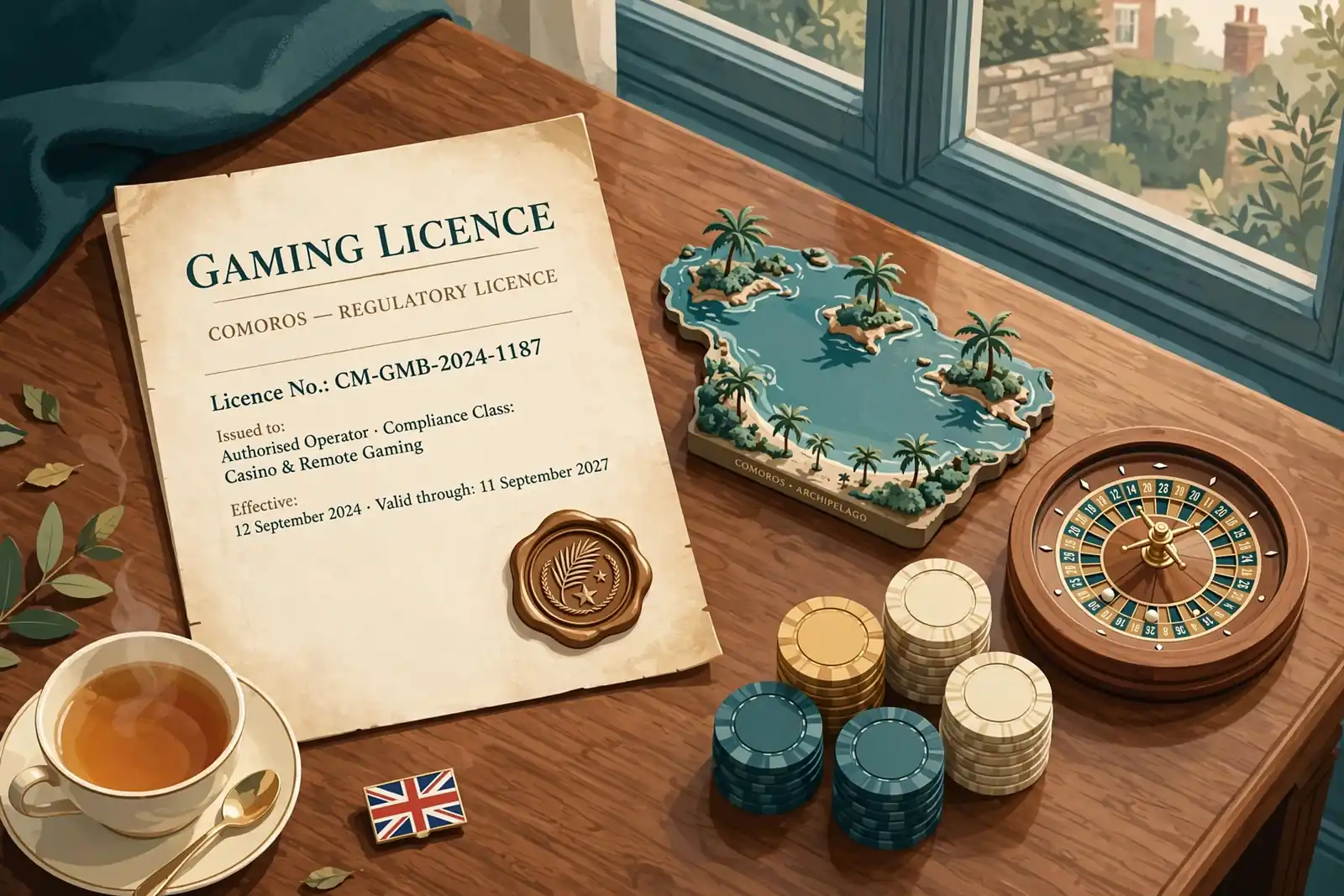
An MGA licence on its own does not put a casino on GamStop. The scheme is tied to UKGC-licensed operators: the Gambling Commission requires every operator it licenses to participate. A Malta-based site operating under an MGA licence, but not a UKGC licence, sits outside that system.
That distinction matters if you have registered with GamStop and are trying to avoid gambling. I once treated a familiar-looking licence badge as if it meant the same protections followed me wherever I played. It doesn’t. The regulator named on a site’s licence determines which rules and systems apply; a Malta address or an MGA badge is not a route into GamStop.
GamStop lets you exclude yourself from all UKGC-licensed gambling sites for six months, one year or five years. During the selected period, those sites are covered by the scheme. Non-UKGC licensed casinos are not. They do not participate in the UK’s self-exclusion scheme, so you should not assume that registering with GamStop will block access to them or prevent them from accepting your account activity.
That is the point people can miss when searching for Malta casinos outside GamStop. The phrase describes a gap in coverage, not an extra version of the scheme. If you have excluded yourself because gambling is causing harm, looking for a site beyond that boundary can undermine the protection you chose. I know how easy it is to tell yourself that one site is different. It is still outside the block.
GamStop Coverage
GamStop only covers UKGC-licensed operators. Casinos operating solely under an MGA licence are not part of the scheme and will not block your access.
There can also be a mistaken assumption that the UK regulator can step in if something goes wrong. The UK Gambling Commission does not approve offshore licences, has no reciprocal arrangements with offshore regulators, and does not handle complaints about operators licensed outside the UK. So the complaint route and oversight you may associate with a UKGC-licensed site do not automatically carry over to an MGA casino.
A site could hold more than one licence, so the relevant question is not simply whether it mentions Malta or the MGA. Check whether that particular operator also holds a UKGC licence for the service you are using. If it does, UKGC requirements, including GamStop participation, apply to that licensed operation. If it only has an MGA licence, it is not covered by GamStop.
If you are already registered, treat “not on GamStop” as a warning about the limits of your exclusion, not as a feature to shop around for. The scheme covers UKGC-licensed sites, not every gambling website you can reach. Keeping that boundary clear is more useful than trusting a badge or a promise on a casino page.
Real-Money Play: The UK Licence Question Comes First
Before I look at a welcome offer or a game lobby, I check whether the operator is allowed to take real-money bets from people in Great Britain. For customers in England, Scotland and Wales, an online casino offering real-money gambling must hold a UKGC licence. The operator’s office being in Malta, or a page describing it as a Malta casino online, does not change that requirement.
That is the practical starting point when you come across an MGA casino or a site presenting itself as one of the Malta online casinos. A Malta connection may tell you something about the company or its regulation elsewhere; it does not establish that the operator can legally serve customers in Great Britain. If the operator offers gambling to UK consumers without a UKGC licence, it is acting illegally. The legal obligation is on the operator, not something a player can fix by ticking a box or accepting terms.

I used to treat the licence question as paperwork I could leave until later. That was backwards. If real-money play is on the table, check the UKGC status before creating an account or paying in. The distinction matters even when a site looks polished and the signup screen lets you proceed. Access to a website is not proof that its operator is authorised for the market.
Age and location are part of eligibility
The Gambling Commission requires operators to check that customers are at least 18 before they can deposit or play. So age verification is not an optional extra to be waved through after you have started gambling. If a site lets you reach real-money play without establishing that you meet the age requirement, treat that as a serious warning about how it is operating.
Offers have their own conditions. To claim a no-deposit offer, you must be physically located in Great Britain. Being a UK resident or visiting a site that loads on your device does not, by itself, meet that location condition. If you are outside Great Britain, do not assume you can claim the offer simply because your account details are British.
That is worth remembering when browsing Malta online casinos, especially where the promotion is the first thing the site puts in front of you. A banner can make an offer look broadly available; the actual eligibility depends on the rules and your circumstances. I would check both before trying to claim it, rather than building a plan around money that may not be available to me.
Real-Money Eligibility
- Confirm the operator holds a UKGC licence for Great Britain
- Verify you meet the minimum age requirement (18+)
- Confirm you are physically located in Great Britain for no-deposit offers
For real-money play, keep the order simple: the operator needs the right UKGC licence for Great Britain, you need to meet the age check, and a no-deposit offer requires you to be physically in Great Britain. Those are separate checks. A site passing one does not make the others irrelevant. No shortcuts.
Can an MGA Casino Accept Players from Great Britain?
A Malta-based casino may say it welcomes British players, or let you create an account from a British address. That tells you what the site is prepared to allow technically. It does not settle whether the operator is authorised to provide gambling to customers where you live.
For Great Britain—England, Scotland and Wales—the rule follows the customer, not the casino’s address. An operator offering remote gambling to people in those countries needs a UKGC licence even if its business is based in Malta. An MGA licence on its own does not meet that requirement. A site’s “accepting UK players” wording is not a substitute.
I used to treat a country selector or a successful registration as proof that a site was meant for me. It isn’t. A website can be reachable and still lack the authorisation required to serve customers in Great Britain. The relevant question is not simply whether you can get through the sign-up screen; it is whether the operator holds the licence required for that market.
That distinction matters when you see phrases such as “Malta casino for UK players” or “MGA casino accepting British customers”. Those words can describe the site’s own policy, not a regulatory decision. They also blur together places with different rules. “UK” is often used casually to include all four nations, but the licensing position in Great Britain should not be applied automatically to Northern Ireland.

Northern Ireland has its own regulatory framework, separate from the one that applies in England, Scotland and Wales. The UK Gambling Commission’s role there is not the same as its role in Great Britain. So a statement about UKGC requirements for Great Britain should not be stretched into a claim that Northern Ireland is governed identically. If you are in Northern Ireland, check the rules that apply there rather than relying on a casino’s broad “UK” label.
For someone in Great Britain, though, the practical point is direct: an operator offering gambling services to consumers there without a UKGC licence is acting unlawfully. That is a requirement on the operator. A site’s willingness to take your details, display Malta-themed branding or offer a free-play option does not change it.
I would not read “available to British players” as “authorised for Great Britain”. Those are different claims, and only one answers the licensing question. If the site’s message leaves you unsure which market it means, treat the wording as unclear—not as evidence that the required permission is in place.
Bonuses: Read the Wagering Before You Deposit
A bonus balance can look like money you have won, but it may not be cash you can withdraw yet. The wagering requirement sets how much you need to stake on qualifying bets before the bonus can be converted into withdrawable funds. I learned to look for that condition before getting excited about the headline offer.
Calculating Wagering Requirements
With a £20 bonus and a 35x wagering requirement, you would need to place £700 in qualifying bets before the bonus can be converted into withdrawable funds.
Here is a worked calculation reported in a specialist affiliate review: with a £20 bonus and a 35x wagering requirement, you would need to place £700 in qualifying bets. That is the total stake required, not an extra amount you pay to the casino. It also does not mean you will have £700 left afterwards; each bet can win or lose, and the offer’s terms determine what counts.
Game weighting can make the total less straightforward. Slots may count each qualifying bet in full, while table games may count only a fraction, such as 10% or 20%; some may contribute nothing. If a game contributes only part of each stake, you would need to place more money on it to reach the same wagering total. Check the game-specific terms rather than assuming every bet moves the counter equally.
That detail is easy to miss when an offer is described as “generous”. The label tells you little about the effort required to clear it. I’ve seen the bonus figure first and the wagering rules second; that order is backwards. Check whether the requirement applies to the bonus alone or is calculated another way, and look for any stated expiry or excluded games in the offer terms. Don’t assume those conditions are identical between Malta-linked sites or between one MGA casino bonus and another.
The same care applies to a no-deposit offer. A Malta casino no-deposit bonus may sound like a free way to try a site, but it still comes with terms, including rules about qualifying play. To claim a no-deposit offer, you must be physically located in Great Britain. A Malta address or a payment option such as Bitcoin does not change that location condition.
Before accepting any bonus, read the wagering figure, the games that count and how much they contribute. Then decide whether the route from bonus balance to withdrawable cash is worth your time and risk. The headline is only the start.

New Malta Casinos: Verify the Licence, Don’t Take the Badge on Trust
A new Malta casino can look polished from day one: a fresh logo, a licence badge and confident wording about where the operator is based. I used to treat that badge as the answer. It isn’t. It tells you what the site claims; it does not, by itself, establish that the operator is authorised to serve customers in Great Britain.
The key check is whether the operator holds a UKGC licence for the service it is offering here. Remote gambling businesses serving consumers in Great Britain need that licence regardless of where they are physically based. So a Malta address, or a claim that a site holds an MGA licence, does not substitute for UK authorisation.
That distinction matters especially with a new MGA casino. A site may be new to you, but the important question is not how recently it launched or how professional the page looks. It is whether the operator behind it has the required UKGC licence. Don’t let “licensed” blur together two different things.

I’d look for the operator’s identity and the licence information it gives, then check whether the UKGC authorises that operator. If the site’s wording is vague, or its badge leads only to its own claims, pause before signing up or depositing. A badge is not the check. The regulator’s status is.
There is another limit worth keeping in view: the UKGC does not approve licences issued by offshore regulators, has no reciprocal agreements with them, and will not handle complaints about operators licensed outside the UK. A Malta licence therefore does not bring the operator into the UKGC system or give you a route to the Commission if something goes wrong.
That is why I don’t treat “new” as a reason to rush. With a new Malta online casino, verify the operator and its UKGC status before trusting the label or the launch-day presentation. If you cannot establish that it is authorised to serve Great Britain, don’t treat an overseas licence as a replacement.
Not glamorous. Just essential.
Are offshore casinos legal for UK players?
No, an operator offering remote gambling to consumers in Great Britain must hold a UK Gambling Commission licence, regardless of where it is based. An offshore licence alone does not authorise it to serve Great Britain.
What tools do UK operators have to provide?
UKGC-licensed operators must offer deposit and loss limits, session limits, time-outs, reality checks and self-exclusion through GamStop.
How can you check whether an online casino is legal?
Check whether it holds a UK Gambling Commission licence to offer remote gambling in Great Britain. A Malta Gaming Authority licence is not a substitute for that licence.
Prepared by the Tenobet Casino 1 editorial staff.